September 25, 2024 · By OKEYPETS
Dog harnesses are essential for pet travel, offering both control and comfort. The variety in materials used for dog harnesses impacts the product's durability, comfort, and aesthetic. Here’s a detailed introduction to the different materials commonly used in dog harnesses:
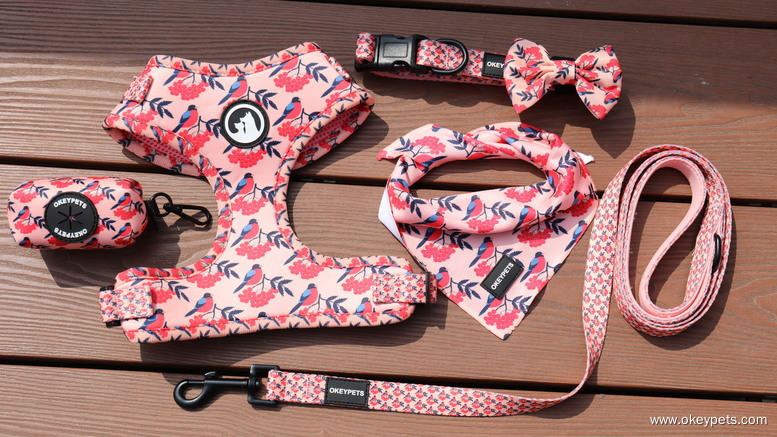
1. Neoprene Dog Harness
Material Overview: Neoprene is a synthetic rubber known for its flexibility, durability, and water resistance.
Advantages:
· Water-Resistant: Ideal for dogs that love water or live in rainy climates.
· Comfortable: Soft to the touch, preventing chafing and irritation on the dog’s skin.
· Durability: Resistant to weather and environmental damage, making it great for active dogs. Disadvantages:
· Heat Retention: It can get warm, making it less ideal for hot climates.
· Higher Price: Due to its quality, neoprene harnesses are often more expensive.
![Different Materials Of Dog Harness 1]()
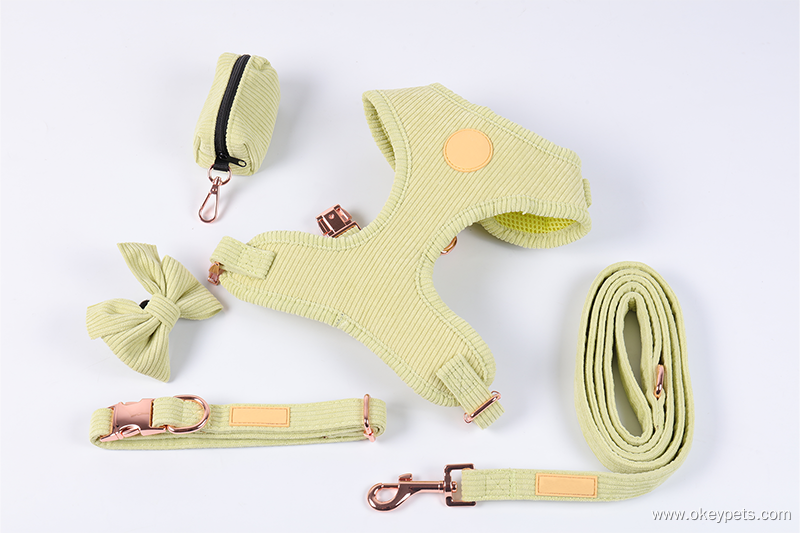
2. Corduroy Dog Harness
Material Overview: Corduroy is a textile with distinctive raised ridges or wales, known for its softness and warmth.
Advantages:
· Comfortable: Soft and gentle on the skin, which is excellent for sensitive dogs.
· Stylish Appearance: Gives a classic and fashionable look to the harness.
· Warmth: Suitable for cooler climates, offering extra warmth during cold seasons. Disadvantages:
· Less Durable in Wet Conditions: Not ideal for wet environments, as it can absorb water and become heavy.
· Difficult to Clean: Dirt can get trapped in the ridges, making it harder to clean.
![Different Materials Of Dog Harness 2]()
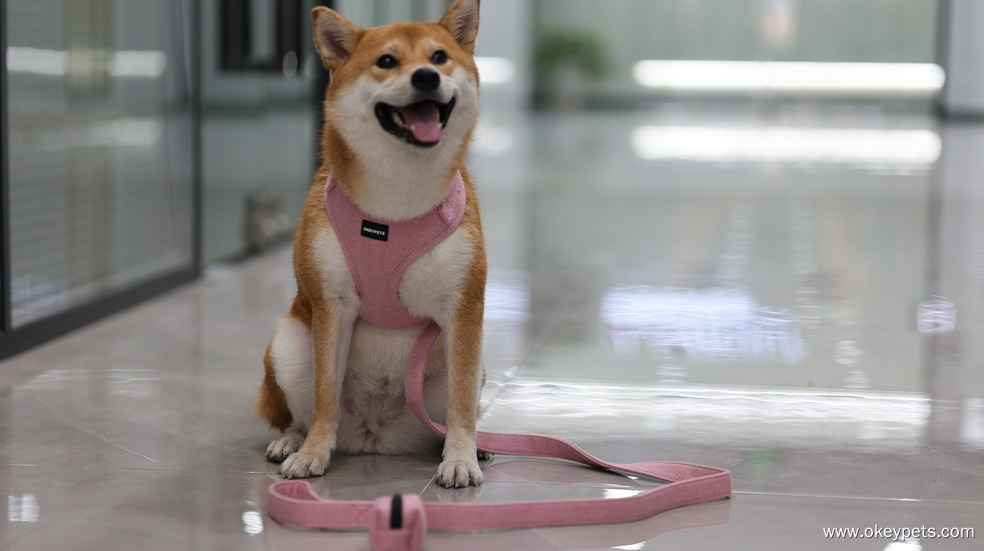
3. Twill Dog Harness
Material Overview: Twill refers to a weaving pattern that creates a diagonal rib pattern. This material can be made from cotton, polyester, or a blend.
Advantages:
· Durable: The tight weave of twill fabric is durable, making it resistant to tearing and wear.
· Soft: Despite its durability, twill is generally soft, ensuring comfort for the dog.
· Easy to Clean: Twill harnesses are relatively easy to maintain and clean. Disadvantages:
· Can Retain Stains: Though easy to clean, some types of twill can retain stains more than other fabrics.
· Moderate Water Resistance: Not as water-resistant as synthetic materials like neoprene.
![Different Materials Of Dog Harness 3]()
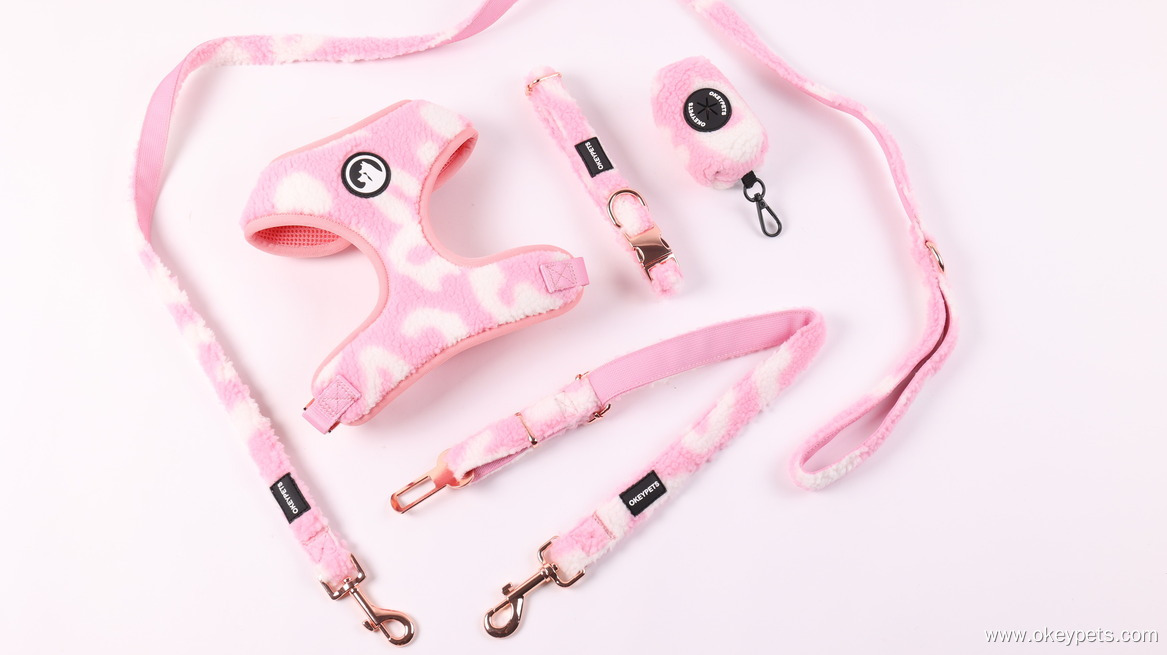
4. Sharpa (Faux Shearling) Dog Harness
Material Overview: Sharpa, or faux shearling, mimics the texture of wool, providing a soft and fluffy surface.
Advantages:
· Comfort and Warmth: Extremely soft and comfortable for dogs, making it ideal for cold climates.
· Stylish: It has a luxurious appearance, adding an aesthetic appeal. Disadvantages:
· Prone to Dirt: The fluffy texture can trap dirt and debris, requiring frequent cleaning.
· Limited Durability: It may wear out faster than tougher fabrics like neoprene or twill, especially in rough conditions.
![https://www.okeypets.com/sherpa-dog-harness]()
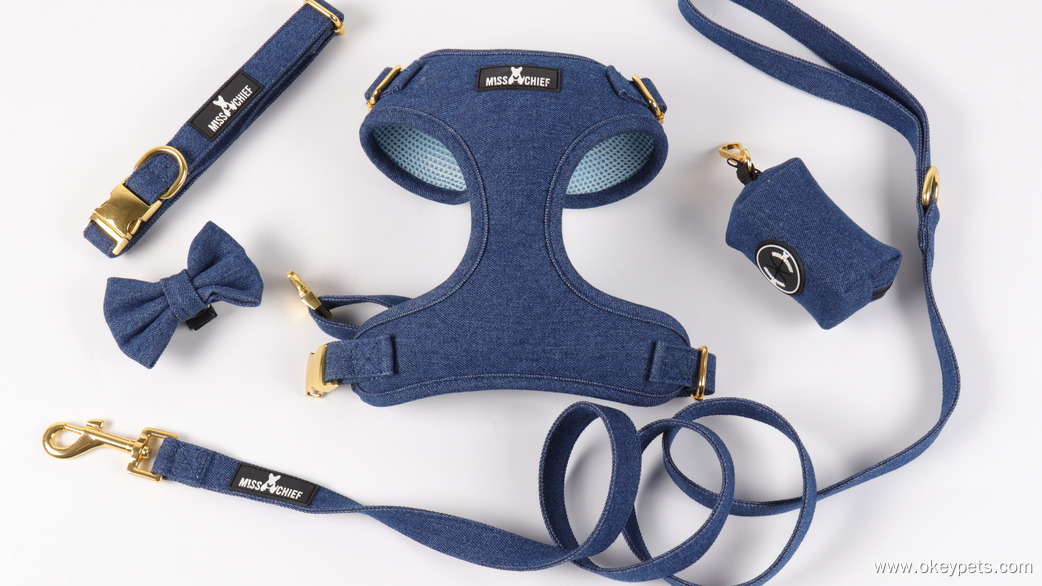
5. Jean (Denim) Dog Harness
Material Overview: Denim is a sturdy cotton twill textile, commonly known for its use in jeans.
Advantages:
· Durable: Denim is tough and long-lasting, suitable for daily use and active dogs.
· Stylish: Offers a trendy and casual look, appealing to fashion-conscious pet owners.
· Comfortable: Over time, denim can become soft and mold to the shape of the dog’s body. Disadvantages:
· Not Water-Resistant: Denim absorbs water and can become heavy when wet.
· Heavier Fabric: Denim can feel heavier than synthetic materials, which may be uncomfortable for smaller dogs.
![Different Materials Of Dog Harness 5]()
Other Considerations
· Padding: Many harnesses, regardless of material, come with additional padding for comfort. Neoprene is often used for this purpose.
· Breathability: Harnesses with mesh panels or breathable fabric are ideal for hot climates.
· Adjustability: Some materials offer more flexibility in terms of adjustability and fit, allowing better control and comfort for the dog.
Each type of dog harness material serves a unique purpose and caters to different climates, activity levels, and aesthetic preferences. Owners should choose based on their dog's needs, lifestyle, and the environment.
1. What factors should I consider when selecting materials for custom dog harnesses?
· Durability: Will the material stand up to daily wear and tear, especially for active dogs?
· Comfort: Is the material soft enough to prevent skin irritation, especially for dogs with sensitive skin?
· Weather Resistance: Do you need water-resistant materials for wet climates or materials that breathe well in hot conditions?
· Style and Design: Will the material lend itself to trendy designs? Does it come in a variety of colors and patterns for customization?
· Cost: What’s the price point of each material, and how does it impact the final product’s price for consumers?
2.What are the best practices for ensuring the safety of custom dog harnesses?
· Strength Testing: Ensure materials are tested for tensile strength to prevent breakage when dogs pull.
· Non-Toxic Materials: Ensure all dyes, adhesives, and fabrics are non-toxic and pet-safe.
· Buckle and Strap Quality: Test metal or plastic components for durability and rust resistance.
3.How do I choose the best material for my dog’s harness?
· For Active Dogs: Neoprene is durable, water-resistant, and great for active, outdoor dogs.
· For Style and Comfort: Corduroy and denim are fashionable options that provide comfort.
· For Cold Climates: Sharpa (faux shearling) harnesses provide warmth and coziness.
· For Sensitive Skin: Twill offers a good balance of comfort and durability, and it’s soft on the skin.
4.What is the difference between the materials in terms of cleaning and maintenance?
· Neoprene: Easy to clean and quick-drying, but may require special care to avoid warping in high heat.
· Corduroy: Machine-washable but may trap more dirt in its ridges.
· Denim: Washable but could shrink over time if not cared for properly.
· Sharpa: Requires more delicate handling due to its fluffy texture.
· Twill: Simple to clean, usually machine washable.
5.What should I consider when choosing a harness size for my dog?
· Adjustability: Look for materials like neoprene or twill that are paired with adjustable straps for a better fit.
· Comfort: Ensure there’s enough padding (especially with neoprene) to avoid skin irritation, particularly under the arms.
· Breed-Specific Needs: Smaller dogs may benefit from soft, lightweight materials like Sharpa or corduroy, while larger, stronger dogs might need something more durable like twill or denim.