



Many dog trainers seem to prefer collars over harnesses, especially for leash training. But does that mean harnesses are “bad”? Not at all. This guide explains why some trainers dislike certain harnesses, when harnesses are actually the safer choice, and how to choose the right equipment for your dog.
Why Some Dog Trainers Dislike Harnesses – And How to Choose the Right Gear for Your Dog
2025-12-01
Table of Contents
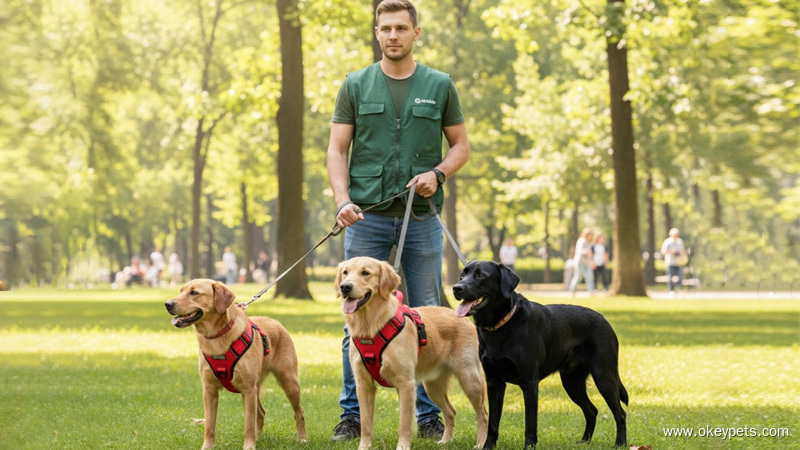
Many dog trainers seem to prefer collars over harnesses, especially for leash training. But does that mean harnesses are “bad”? Not at all. This guide explains why some trainers dislike certain harnesses, when harnesses are actually the safer choice, and how to choose the right equipment for your dog.
Table of Contents
1.Why Do Some Dog Trainers Dislike Harnesses?
2.Not All Harnesses Are the Same: Types & Key Differences
3.Harness vs. Collar: Safety, Control, and Communication
4.When a Harness Is Actually the Better Choice
5.When a Collar or Other Tools May Be Useful
6.How to Stop Pulling Even If Your Dog Wears a Harness
7.A Simple Decision Guide: Harness, Collar, or Both?
8.For Pet Brands & Retailers: Design Priorities Trainers Care About
9.FAQ
10.Final Thoughts
1. Why Do Some Dog Trainers Dislike Harnesses?
From a trainer’s perspective, the issue is rarely “all harnesses are bad.” It’s usually:
Pulling gets rewarded – many dogs learn that leaning into a harness lets them drag their handler forward without discomfort.
Less precision – steering from the shoulders instead of the head can make quick redirection harder in busy environments.
Owner expectations – people buy a “no-pull harness” and expect a miracle, instead of pairing equipment with real leash training.
So the frustration is mostly about:
The wrong harness, on the wrong dog, with no training plan.
2. Not All Harnesses Are the Same: Types & Key Differences
Different clip positions and structures behave very differently on the leash.
Here’s a quick overview.
Comparison of Common Harness Types
| Harness Type | Leash Attachment Position | Best For | Main Pros | Main Cons |
| Back-clip | On the dog’s back, between shoulders | Casual walks, jogging, hiking, long-line walks | Comfortable for many dogs; avoids neck pressure; simple to use | Can make pulling easier; less steering and directional control |
| Front-clip | On the front of the chest | Dogs that pull; leash training in busy areas | Helps turn dog toward handler; reduces pulling efficiency; protects neck | Requires good fit; may twist or rub if loose; some dogs need time to adjust |
| Dual-clip | Front and back (two attachment points) | Dogs with a history of pulling; flexible use | Very versatile; can combine control (front) and freedom (back); adjustable as training progresses | Slightly more complex to explain to owners; often higher price point |
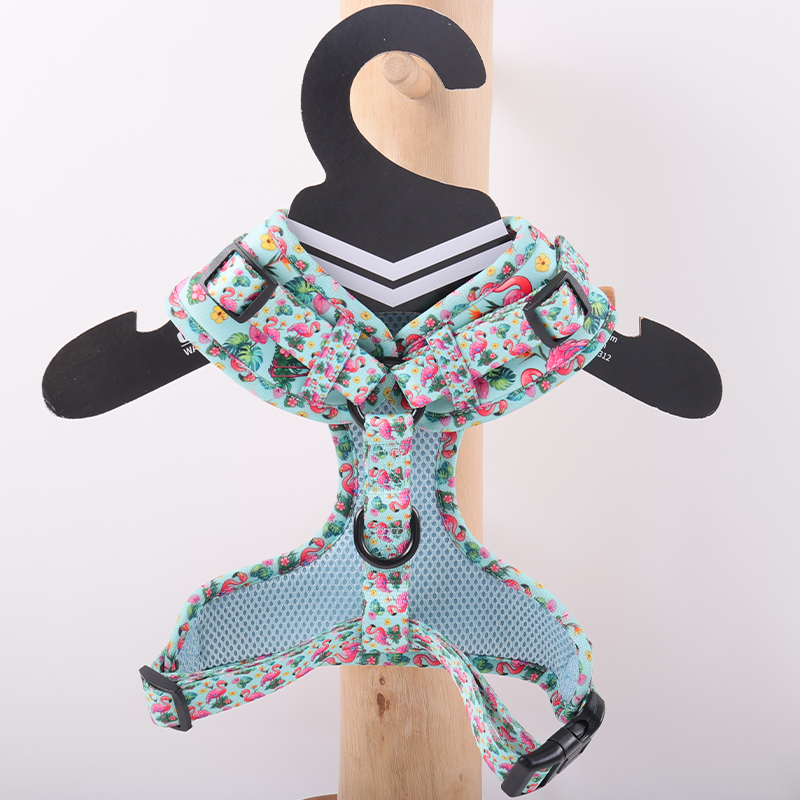
Back-clip
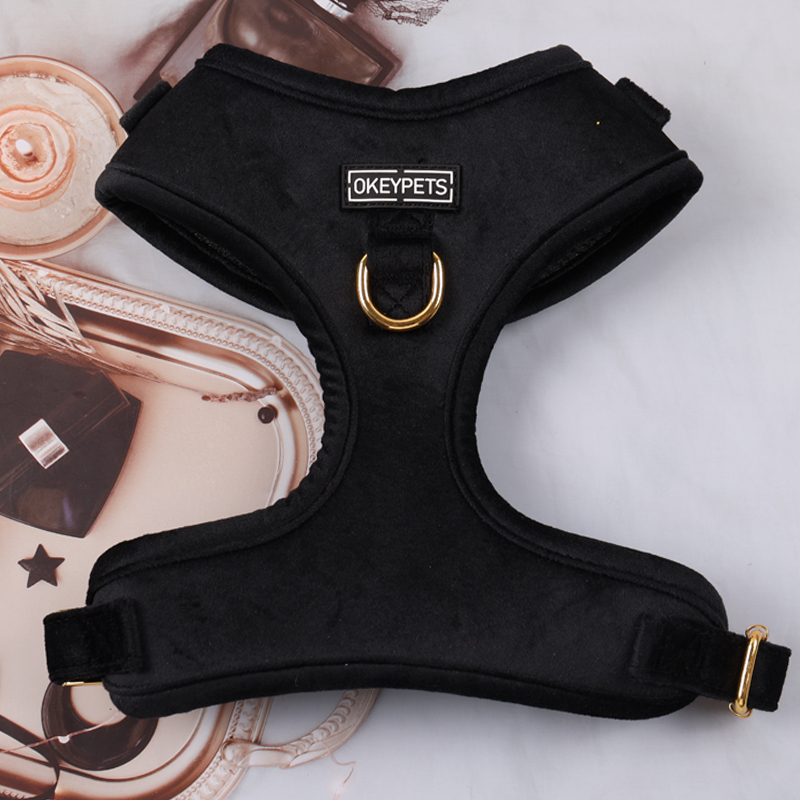
Front-clip
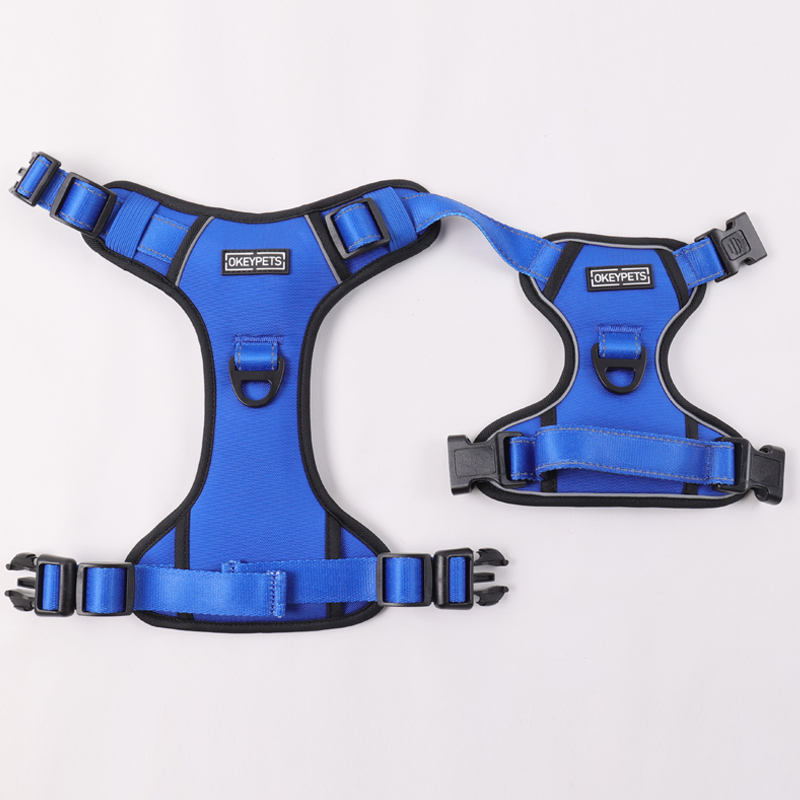
Dual-clip
Shape and fit matter just as much as clip position:
Harness Shape and Fit
| Shape Type | Visual Description | Movement Impact | Typical Use Cases | Key Considerations |
| Y-shaped | Straps form a “Y” on the chest | Generally allows natural shoulder motion | Long walks, sports, active dogs, daily use | Often preferred for healthy movement and comfort |
| H-shaped | Straps form an “H” along body and chest | Depends on pattern and fit | Everyday walking, simple designs | Must avoid cutting into armpits or shoulders |
| Step-in | Dog steps into harness from the front | Varies with design; can restrict if poor | Easy-on/easy-off for cooperative dogs | Fit is critical to prevent rubbing and twisting |
In practice, trainers favor designs that protect the neck and allow natural movement, especially for active or working dogs.
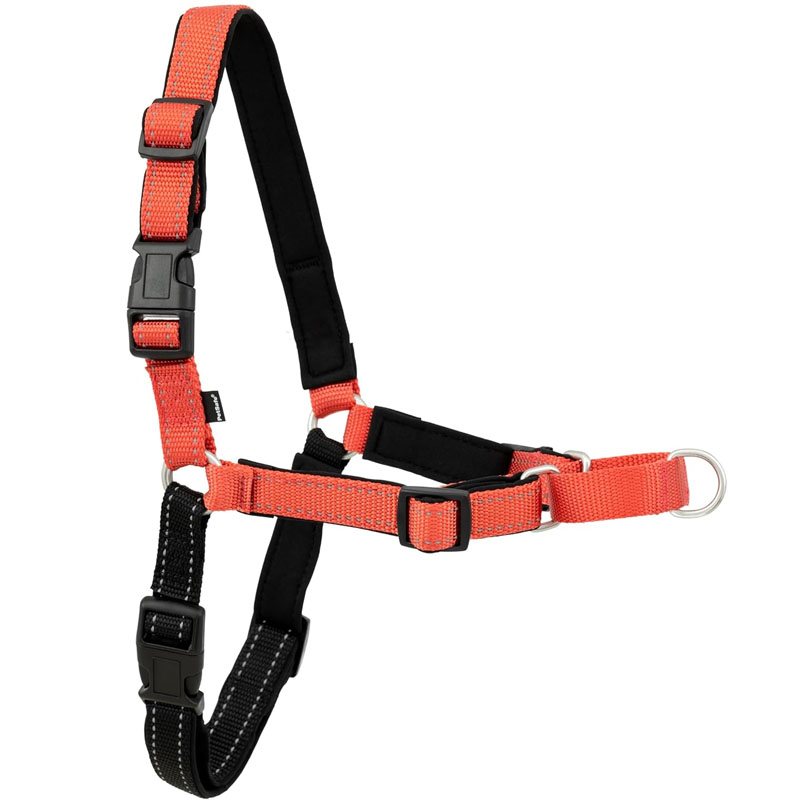
Y-shaped Dog Harness
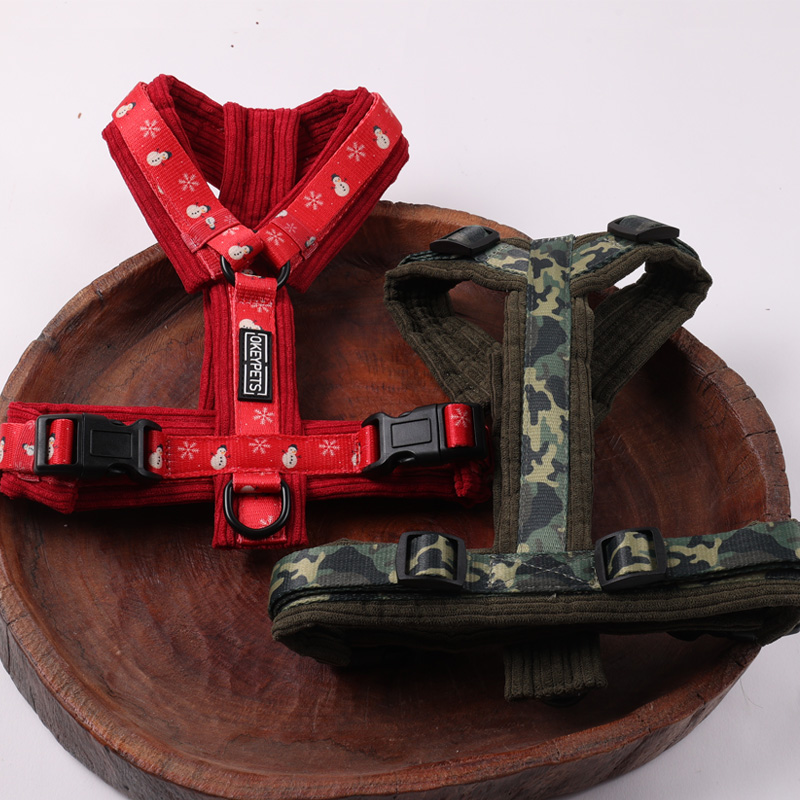
H-shaped Dog Harness
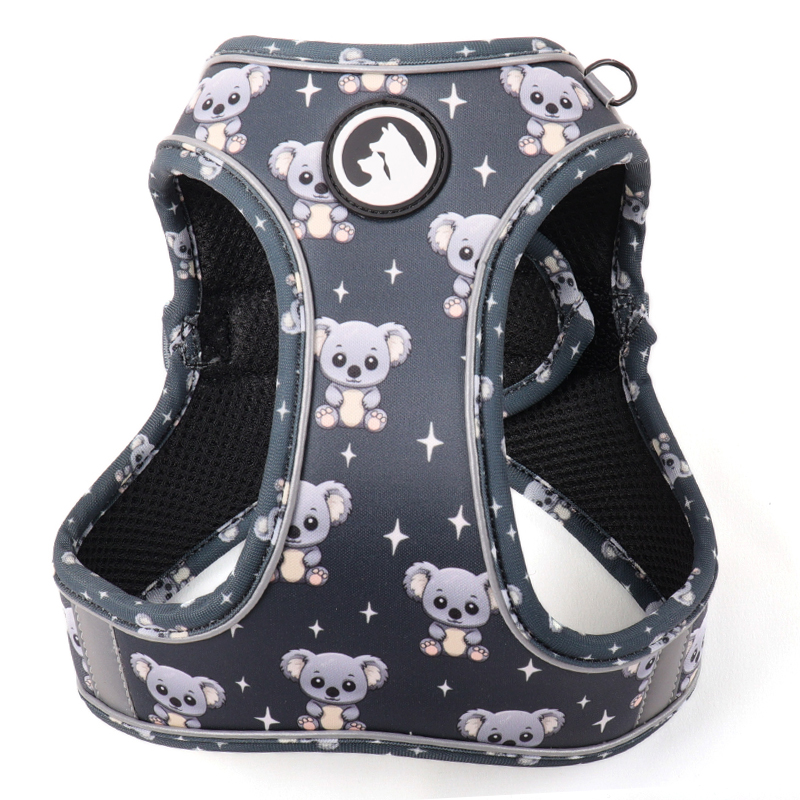
Step-in Dog Harness
3. Harness vs. Collar: Safety, Control, and Communication
Both harnesses and collars have a place in modern training. The key is knowing what each does best.
Harness vs. Collar Comparison
| Aspect | Harness | Collar |
| Primary Pressure Area | Chest and torso | Neck and throat |
| Neck Safety | High – reduces direct pressure on trachea and cervical spine | Lower – especially risky with strong or constant pulling |
| Best For Health | Dogs with tracheal issues, respiratory problems, neck injuries, very small or very senior dogs | Dogs without neck/respiratory issues that do not pull |
| Control (Raw Power) | Moderate – depends on clip position and fit | High – especially for dogs that already have good leash skills |
| Signal Clarity | Can be “softer” and less precise, especially with back-clip | Often clearer and more immediate near the head |
| Risk of Encouraging Pulling | Higher with back-clip if no training is done | Lower, but can still happen if dog has never been trained |
| Emotional Focus | Often perceived as more comfortable and secure | Can be neutral or negative depending on how it is used |
| Ideal Use | Safety, health protection, outdoor adventures, young or anxious dogs, modern positive training setups | ID tags, already trained dogs, backup tool, short controlled sessions |
If neck and airway safety are your top priority, the harness column will usually win. If your dog already has excellent leash manners, the collar column becomes more relevant.
4. When a Harness Is Actually the Better Choice
You’ll hear many trainers say “use a harness” in these situations:
Health concerns – small breeds, short-nosed breeds, dogs with tracheal or neck issues, very senior dogs.
Puppies and flight risks – young, newly adopted, or fearful dogs that might try to slip away.
Outdoor adventures – hiking, camping, running, or any environment where a sudden lunge could be dangerous.
Working and service dogs – dogs that need stable, comfortable gear that can carry patches, handles, or light equipment.
Whenever the risk to the neck is high—or the environment is unpredictable—a harness is the safer baseline.
5. When a Collar or Other Tools May Be Useful
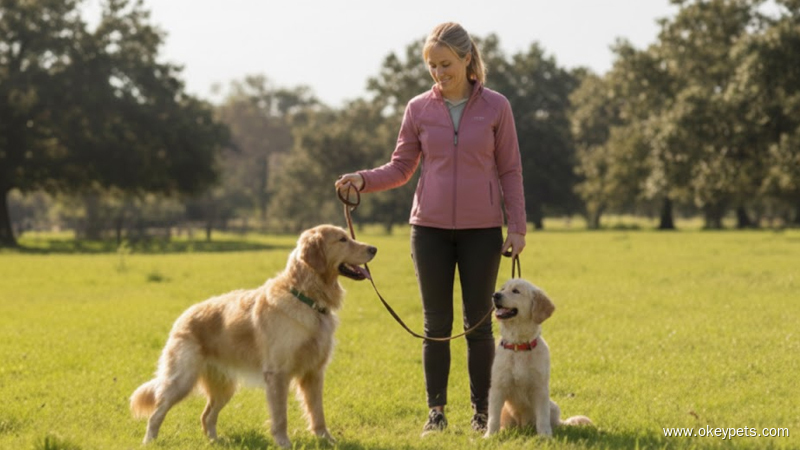
No tool is magic. But some tools are more practical in specific roles.
Overview of Common Walking and Training Tools
| Tool | What It Is / How It Works | Main Pros | Main Cons / Risks | Best Used When… |
| Flat collar | Simple collar around the neck | Light, simple, holds ID tags; fine for dogs with good leash manners | Can provide very fast feedback in experienced hands | Dog already walks nicely; as everyday ID and backup tool |
| Harness (well-designed) | Straps around chest/torso; front/back or dual-clip options | Protects neck; can reduce pulling with front or dual clips; comfortable for many dogs | Back-clip styles can encourage pulling if misused | Dogs with health issues; strong pullers; long walks; modern R+ training |
| Head halter | Straps over muzzle and behind ears, like a horse halter | High directional control; easy to redirect attention | Needs careful introduction; harsh use can risk neck strain | Large, strong pullers; highly distracting environments; under trainer guidance |
| Slip lead / corrective tools | Tightening loop around the neck that releases when slack | Can provide very fast feedback in experienced hands | High risk of pain, fear, or injury if misused; easily overused | Only with experienced, welfare-focused trainers and for specific cases |
For most everyday owners, a flat collar + good harness will cover almost all real-life needs.
6. How to Stop Pulling Even If Your Dog Wears a Harness
Equipment can help, but training is what stops pulling.
Core rules
Pulling = the walk stops.
Loose leash = the walk continues.
Walking near you and checking in with you = lots of rewards.
Simple loose-leash steps
1.Start in a low-distraction area.
2.Hold the leash so it hangs in a light “smile,” not tight.
3.Reward your dog whenever the leash is loose and they’re near you.
4.If they pull, stop moving and wait until the leash loosens again.
5.When it does, reward and walk on.
Repeat, keep sessions short, and slowly add more distractions over time.
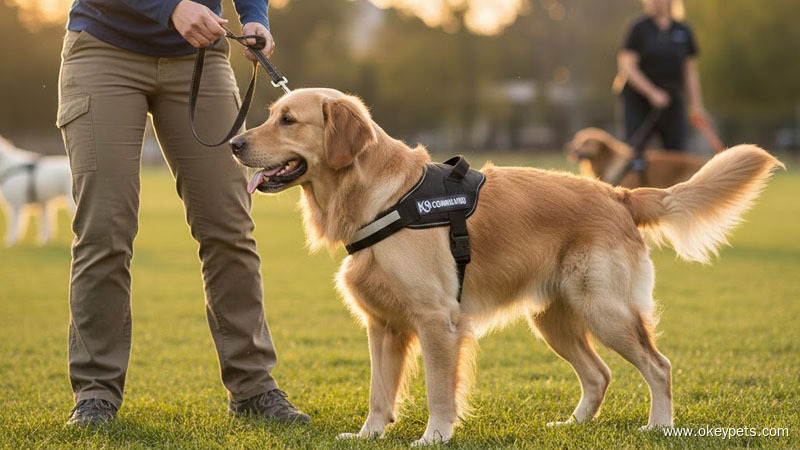
7. A Simple Decision Guide: Harness, Collar, or Both?
Use these questions as a quick mental checklist:
Neck / breathing issues?
→ Go harness-first, collar mainly for ID tags.
Strong puller?
→ Front-clip or dual-clip harness + loose-leash training.
Already walks nicely?
→ Either collar or harness is fine; choose whatever is safer and more comfortable for your walks.
Busy city, lots of surprises?
→ Prioritize control: well-fitted harness; consider extra tools only with trainer guidance.
Most families end up with a combo: a flat collar for ID and a well-designed harness for daily walks.
8. For Pet Brands & Retailers: Design Priorities Trainers Care About
If you design or sell harnesses, you can win over trainers by focusing on:
Anatomical structure – Y-shaped chest, no cutting across shoulders or armpits.
Clip options – front + back D-rings to support both training and casual use.
Fit & adjustability – multiple adjustment points for stability and escape prevention.
Comfort under load – wide, padded chest panels and smooth edges.
Durability & safety – strong webbing, reliable hardware, reflective details.
User education – clear size charts, fitting instructions, and basic leash-training tips.
That turns your harness from “just a product” into a real training-friendly solution.
9. FAQ
Q1: Are harnesses bad for training?
No. Some harnesses can make pulling easier if used alone, but well-designed front-clip or dual-clip harnesses can actually support training when combined with good technique.
Q2: Should I ditch the collar completely?
Not necessarily. A flat collar is still useful for ID and for dogs that already walk nicely. Many owners use a collar for identification and a harness for walking.
Q3: My dog pulls hard. Do I need special equipment or a trainer?
Ideally both. Good equipment makes it easier to stay safe and manage your dog; good training is what truly changes the behavior.
10. Final Thoughts
Dog trainers don’t dislike harnesses “just because.” They’re reacting to designs and usage that:
Make pulling easier
Reduce control in tough environments
Get used as shortcuts instead of real training
Choose tools that protect your dog’s body, support clear communication, and fit your real lifestyle. Then invest a little time in loose-leash training.
That’s how you get what everyone really wants: comfort, safety, and calm, enjoyable walks—for both ends of the leash.
Reasons for recommending
[1]: Find out if these harnesses live up to their name and how to use them effectively.
[2]: Learn about the potential issues that can arise from using an ill-fitting harness.
[3]: Understand the appropriate situations for using a flat collar versus a harness.
[4]: Get a step-by-step guide to improve your dog's walking behavior.
[5]: Find out how this versatile option can adapt to your dog's training needs.
ReviewsNumber of comments: {{ page.total }}
I want to comment?
{{item.nickname ? (item.nickname.slice(0, 2) + '*****') : item.source === 1 ? 'mall buyer' : '--'}}
{{item.comment_time}}
Review in the {{item.country}}
Reviews
Merchant
{{replyItem.nickname ? (replyItem.nickname.slice(0, 2) + '*****') : replyItem.source === 1 ? 'mall buyer' : '--'}}
{{replyItem.parent_nickname ? (replyItem.parent_nickname.slice(0, 2) + '*****') : '--'}}
{{replyItem.is_merchant_reply === 1 ? replyItem.reply_time : replyItem.comment_time}}
Review in the {{replyItem.country}}
Reviews

No customer reviews
Recommended for you
Get in touch with us
OKEYPETS specializes in providing high-quality dog harnesses, collars, leashes, and other pet accessories. We are committed to quality and customization to ensure that your products not only look great, but also provide a sense of comfort and safety.
QUICK LINKS
PRODUCTS
CONTACT US
Contact Person: OKEYPETS Bella
TEL/WHATSAPP: +8618319574312
E-MAIL: sale@okeypets.com
ADD: No. 777, Helong First Road, Helong Street, Baiyun District, Guangzhou, Guangdong, China,. 510000
Copyright © 2026 | GUANGZHOU OKEYPETS PRODUCTS CO.,LTD - www.okeypets.com All Rights Reserved. | Privacy Policy