



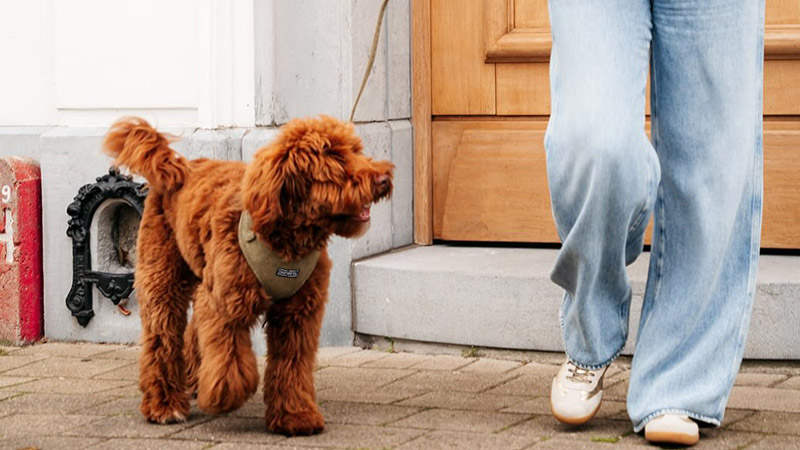
Puppies can safely start wearing a harness from around 8 weeks old, which is also the age many puppies go to their new homes. At this stage, your goal is not perfect leash manners—it’s simply to help your puppy feel safe, comfortable, and relaxed in a harness so future walks and training are easier.
What Age Can Puppies Start Wearing a Harness? Vet-Approved Guide to Safe Leash Training
2025-12-03
Table of Contents
Puppies can safely start wearing a harness from around 8 weeks old, which is also the age many puppies go to their new homes. At this stage, your goal is not perfect leash manners—it’s simply to help your puppy feel safe, comfortable, and relaxed in a harness so future walks and training are easier.
With the right fit and a gentle introduction, an early start with a harness can protect your puppy’s neck, support healthy training habits, and prevent many common problems before they appear.
Benefits Of Early Harness Training
Safety And Comfort
Neck Protection
Puppies are naturally excited, impulsive, and prone to sudden bursts of energy. When a young dog hits the end of a leash attached to a collar, all that force goes straight to the neck and trachea. Over time, this may contribute to:
· Coughing or gagging when pulling
· Irritation of the trachea
· Increased risk for breeds already prone to airway issues
A well-fitted harness spreads pressure across the chest and shoulders instead of the neck. This is especially important for:
· Small and toy breeds
· Flat-faced breeds (brachycephalic)
· Puppies that pull or lunge
· Sensitive or delicate puppies
Better Overall Control
· Harnesses give you more points of contact with your puppy’s body, making it easier to:
· Guide them away from danger (cars, bikes, other dogs)
· Prevent sudden lunges or zig-zagging across the sidewalk
· Support shy or nervous puppies in new environments
This extra control helps keep both you and your puppy safe while they’re still learning how to walk on a leash.
How To Introduce A Harness
Type Of Dog Harness For Puppies
Before you start training, choose a harness that suits a young, growing puppy:
| Harness Type | Clip Position | Best For | Advantages for Puppies | Not Ideal When… |
| Y-shaped Harness | Back or Front | Most puppies, especially active breeds | Allows freer shoulder movement, good pressure distribution | Straps are too narrow or cut into the armpits |
| H-style Harness | Back | Slim or small-boned puppies | Simple design, easy to adjust, lightweight | Chest strap sits too close to the neck |
| Vest-style Harness | Back | Tiny or toy breeds, very sensitiv e puppies | Soft, wraps the chest, often more comfortable and secure | Fabric is too thick or not breathable in hot weather |
| Step-in Harness | Back | Confident puppies used to being handled | Easy to put on from below, good for dogs that dislike overhead harnesses | Puppy is very wiggly or hates feet being handled |
| Dual-clip Harness | Front + Back | Strong pullers as they grow older | Offers more control options as training progresses | Hardware may be too heavy for very small young pups |
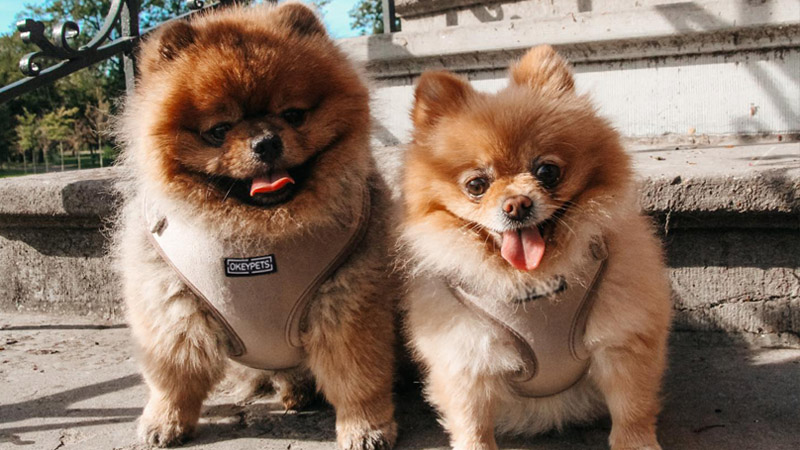
Once you have a suitable harness, introduce it step by step.
Step 1: Let Your Puppy Meet The Harness (Familiarization)
· Place the harness on the floor and let your puppy sniff, explore, and investigate at their own pace.
· Every time they approach it, drop a small treat nearby.
· You can lightly tap or move the harness so it becomes a normal object, not something scary.
Goal: your puppy thinks, “This thing appears, and good things happen.”
Step 2: Short Indoor Sessions
· Gently slip the harness over your puppy’s head or help them step into it, depending on the design.
· Adjust it quickly but calmly, then reward immediately with praise, petting, or treats.
· At first, let them wear the harness for just 5–10 minutes indoors while doing something pleasant:
Mealtime
Gentle play
Short training games
If your puppy scratches, rolls, or tries to bite the harness, stay calm:
· Distract with a toy or treat.
· Avoid scolding—they’re just getting used to the new sensation.
Gradually increase the time they wear it over a few days.
Step 3: Add The Leash Indoors
Once your puppy is comfortable simply wearing the harness:
· Clip on a lightweight leash and let them drag it around under supervision for a few minutes.
· Reward calm behavior and any time they come towards you with a loose leash.
· Practice short “follow me” games:
Walk a few steps, call your puppy, reward when they follow.
This step teaches your puppy that the feeling of a leash attached to the harness is normal and that staying close to you pays off.
Step 4: First Short Walks Outside (After Vaccinations)
When your vet confirms it’s safe for outdoor walks:
· Start in a quiet area with few distractions.
· Keep the first walks very short—5–10 minutes.
· Reward often for:
Walking beside you
Checking in with eye contact
Standing calmly when you stop
Don’t worry if the first few walks aren’t perfect. The focus at the puppy stage is confidence and positive experiences, not strict obedience.
Considerations
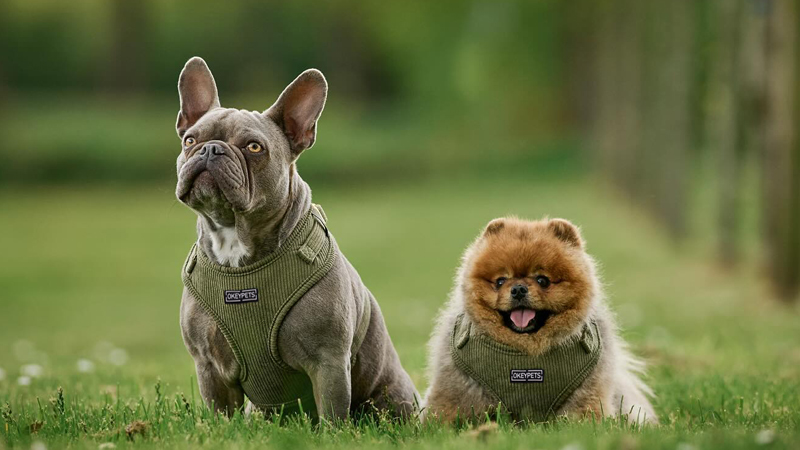
While puppies can wear harnesses from a young age, pay attention to:
· Fit and adjustment
You should be able to fit two fingers between the harness and your puppy’s body.
Check the front chest strap and the girth strap behind the front legs for tightness or rubbing.
· Growth spurts
Puppies can change size quickly.
Re-check the fit every 1–2 weeks, or sooner during fast growth periods.
· Skin and coat
Regularly check under the harness for:
Redness
Hair loss
Sores or scabs
If you see irritation, give your puppy a break from the harness, adjust the fit, or consider a softer design.
· Behavior and comfort
If your puppy consistently freezes, panics, or seems distressed in the harness, go back a step:
Shorter sessions
More treats
Slower introduction
Expert Advice From Trainers
Many professional trainers prefer harnesses for young puppies because they:
· Provide better control without punishing natural puppy behavior.
· Help prevent the puppy from learning that pulling creates painful sensations around the neck.
· Support reward-based training, where movement, treats, and praise reinforce good behavior.
Common trainer tips include:
· Go at your puppy’s pace
For some puppies, the full process (from meeting the harness to confident outdoor walks) might take a week or two.
· Make the harness part of fun routines
Put the harness on before playtime or feeding so it predicts good things.
· Avoid sudden tension on the leash
Instead of jerking the leash, guide your puppy with food lures, direction changes, and calm, consistent cues.
Insights From Veterinarians
Veterinarians generally agree that:
Puppies can safely start wearing a harness as soon as they come home, as long as:
The fit is correct.
The puppy is monitored.
The harness is made from safe, pet-appropriate materials.
They often highlight:
· Preventing neck injuries
Especially for small breeds or those prone to airway problems.
· Monitoring fit over time
An overly tight harness can cause:
Chafing in the armpits
Pressure sores
Restricted movement
· Clinic policies
Some clinics may briefly use their own slip leads for safety during transfers.
Once the exam or procedure is complete, your puppy can be returned to their own harness for going home.
If you’re unsure about your puppy’s harness type or fit, many vets and vet nurses are happy to check and offer suggestions during a consultation.
FAQ
Q1: How long should a puppy wear a harness each day?
A: Puppies can wear a harness for longer periods during the day as long as they are comfortable and supervised. However, it’s best to:
Use the harness for walks, training, and supervised indoor time.
Remove it during sleep, crate time, and when your puppy is alone, to prevent snagging or chewing.
Check the skin regularly for any signs of irritation.
Q2: Should a puppy wear a collar all the time?
A: Many owners choose to keep a collar with ID tags on their puppy most of the time for identification, especially outdoors. However:
Make sure the collar fits properly (again, the two-finger rule).
Consider removing the collar during:
Crate time
Rough play with other dogs
Unsupervised periods where it might catch on something
If you live where microchipping and ID tags are required or recommended, a collar is still important even if you use a harness for walking.
Q3: Should puppies use collars or harnesses for walks?
A: Collars and harnesses serve different purposes:
Collars
Best for carrying ID tags and sometimes light training indoors.
Not ideal for puppies that pull, lunge, or have respiratory sensitivity.
Harnesses
Better for walks and outdoor training, especially for young or small dogs.
Provide more control and reduce strain on the neck.
Many owners use both: a collar for ID and a harness for walking and training.
Q4: Are there harnesses designed for all-day wear?
A: Some harnesses are marketed as “all-day” or “comfort” harnesses, with softer materials and padding. Even so, it’s usually not recommended to leave any harness on 24/7. If you choose to let your puppy wear a harness for much of the day:
Ensure it’s soft, well-fitted, and not rubbing.
Remove it regularly to let the skin air out and to check for irritation.
Take it off for unsupervised time, sleep, and rough play.
Q5: Can dogs sleep with a harness on?
A: They can, but it’s often safer and more comfortable not to. Sleeping with a harness on can:
Increase the risk of straps twisting or snagging.
Create pressure points on the same areas for many hours.
Cause tangling if your puppy shifts frequently in their sleep.
Most experts recommend removing the harness at night so your puppy can relax completely.
Conclusion
Introducing a harness to your puppy around 8 weeks old is not only safe—it can set them up for a lifetime of comfortable, confident walks. By:
· Choosing a soft, adjustable harness suitable for young puppies
· Introducing it gradually with treats and praise
· Checking the fit regularly as they grow
· Using it mainly for supervised time, walks, and training
…you’ll protect your puppy’s neck, make leash training easier, and create positive associations with going out into the world.
With patience, consistency, and the right equipment, your puppy’s first harness can be the start of many happy, safe adventures together.
Reasons for recommending
[1]: Explore this link to find the best harness options that ensure safety and comfort for your puppy.
[2]: This resource provides step-by-step guidance on introducing a harness to your puppy effectively.
[3]: Learn about the issues a harness can help prevent, ensuring your puppy's well-being.
[4]: Get insights on key training focuses during the critical puppy stage for long-term success.
[5]: Understand the importance of ID tags for your puppy's safety and identification.
[6]: Find out about harnesses suitable for all-day wear and their benefits for puppies.
ReviewsNumber of comments: {{ page.total }}
I want to comment?
{{item.nickname ? (item.nickname.slice(0, 2) + '*****') : item.source === 1 ? 'mall buyer' : '--'}}
{{item.comment_time}}
Review in the {{item.country}}
Reviews
Merchant
{{replyItem.nickname ? (replyItem.nickname.slice(0, 2) + '*****') : replyItem.source === 1 ? 'mall buyer' : '--'}}
{{replyItem.parent_nickname ? (replyItem.parent_nickname.slice(0, 2) + '*****') : '--'}}
{{replyItem.is_merchant_reply === 1 ? replyItem.reply_time : replyItem.comment_time}}
Review in the {{replyItem.country}}
Reviews

No customer reviews
Recommended for you
Get in touch with us
OKEYPETS specializes in providing high-quality dog harnesses, collars, leashes, and other pet accessories. We are committed to quality and customization to ensure that your products not only look great, but also provide a sense of comfort and safety.
QUICK LINKS
PRODUCTS
CONTACT US
Contact Person: OKEYPETS Bella
TEL/WHATSAPP: +8618319574312
E-MAIL: sale@okeypets.com
ADD: No. 777, Helong First Road, Helong Street, Baiyun District, Guangzhou, Guangdong, China,. 510000
Copyright © 2026 | GUANGZHOU OKEYPETS PRODUCTS CO.,LTD - www.okeypets.com All Rights Reserved. | Privacy Policy