



Veterinarians overwhelmingly recommend stainless steel dog bowls for maximum hygiene because they are non-porous, rust-resistant, and easy to clean, preventing bacterial growth. Stainless steel is a durable and safe material that doesn't absorb odors or leach chemicals, making it a reliable choice for daily feeding.
Vet-Recommended Dog Bowls: Which Material Is Truly the Most Hygienic?
2025-12-05
Table of Contents
Veterinarians overwhelmingly recommend stainless steel dog bowls for maximum hygiene because they are non-porous, rust-resistant, and easy to clean, preventing bacterial growth. Stainless steel is a durable and safe material that doesn't absorb odors or leach chemicals, making it a reliable choice for daily feeding.
Keeping your dog’s bowl clean isn’t just about looking neat – it directly affects skin health, digestion, and even the risk of infection.
If you’ve ever noticed things like:
· A slimy film on the bowl
· Little pimples or redness on your dog’s chin
· Food or water that develops a smell quickly
…then the bowl material and cleaning routine are probably part of the problem.
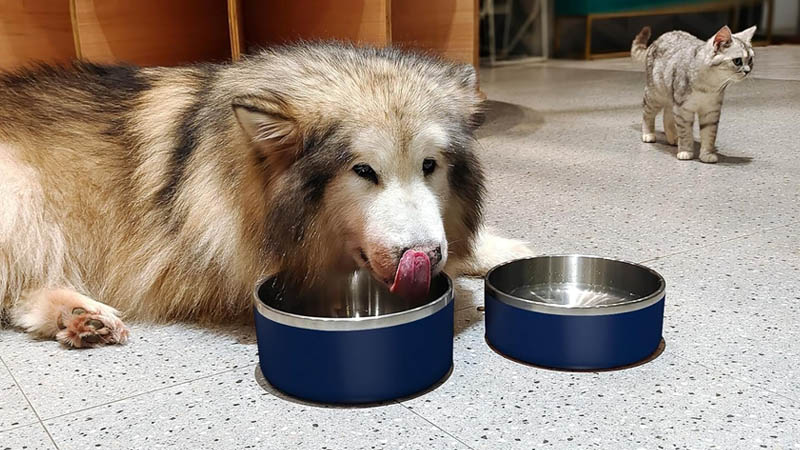
This guide will help you:
Choose the most hygienic bowl material
Match bowl types to your dog’s needs and lifestyle
Know when to replace old bowls
Understand what matters if you’re a pet brand or retailer choosing a manufacturer
1. Vet-Recommended Materials at a Glance
Most veterinarians prefer polished stainless steel for everyday food and water bowls, with high-quality ceramic as a close second when it’s intact and food-safe. Plastic is generally the least recommended for long-term daily use.
Here’s the quick overview in table form:
| Material | Vet Preference for Hygiene | Hygiene Summary | Key Strengths | Main Cautions |
| Stainless steel | ⭐⭐⭐⭐⭐ | Non-porous, easy to disinfect, lowest bacterial retention | Extremely durable, dishwasher-safe, resists odors | Replace if rust spots, deep scratches, or coating damage appear |
| Ceramic (food-safe glaze) | ⭐⭐⭐⭐ | Hygienic when glaze is intact and surface is smooth | Heavy (harder to tip), very attractive designs | Any chips, cracks, or crazing can harbor bacteria; risk of breakage |
| Plastic | ⭐ | Scratches easily; grooves trap bacteria over time | Lightweight, cheap, colorful | Not ideal for daily long-term use; may leach chemicals if poor quality |
| Bamboo / plant-based blends | ⭐⭐⭐ | Hygiene depends on formula and surface finish | Eco-friendly image, nice texture | Not as durable or heat-resistant as stainless steel |
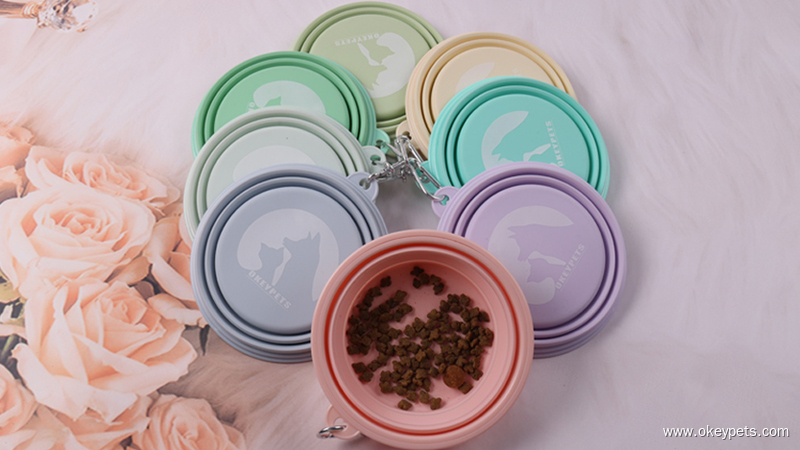
| Silicone | ⭐⭐⭐⭐ | Non-porous and flexible, easy to clean if folds are washed well | Collapsible, great for travel | Too soft and light for many dogs as a full-time home bowl |
For maximum hygiene and practicality, most vets recommend stainless steel as the primary bowl, with high-quality ceramic as a secondary option for style-conscious homes.
2. Why Bowl Material Matters for Hygiene
Bacteria love:
· Warmth
· Moisture
· Food residue
· Tiny scratches, pores, and cracks where they can hide
Dog bowls are the perfect combination of all four, especially if:
· The bowl surface is scratched or chipped
· Food is left out for long periods
· The bowl isn’t washed after every meal
Over time, a biofilm can form – a slimy bacterial layer that sticks to the surface even when the bowl looks “visually okay”.
Material determines:
· How easily bacteria can attach and hide
· How well the bowl tolerates hot water and disinfectants
· How quickly it gets scratched, chipped, or damaged
· Whether there is any risk of chemical leaching
That’s why choosing the right material – and not just the right size or color – is so important.

3. Material Deep Dive: Hygiene, Durability & Best Uses
Below is a more detailed table that expands on each common material from a practical point of view.
3.1 Detailed Material Comparison
| Material | Hygiene Performance | Durability & Damage Risk | Chemical / Safety Concerns | Best Use Cases | Not Ideal For |
| Stainless steel | Excellent – non-porous, easy to sanitize | Very high – resists impact, heat, and most scratches | Food-grade stainless steel is generally very safe | Daily food & water bowls, multi-dog homes, raw feeding | Owners who insist on highly decorative designs |
Ceramic (with food-safe glaze) | Very good when intact; poor if chipped/cracked | Moderate – can chip or shatter if dropped or knocked hard | Needs certified food-safe glaze to avoid heavy metals | Stylish home bowls, medium to small dogs | Rough, bowl-pushing dogs; homes with slippery floors |
| Plastic | Weak – scratches trap bacteria; biofilm builds easily | Low to moderate – scratches, warps, and discolors over time | Low-quality plastics may leach chemicals like BPA | Short-term or backup use, low-budget setups | Long-term daily food/water use |
| Bamboo / plant-based blends | Moderate to good if surface is smooth | Moderate – can weaken with long-term soaking or high heat | Depends on resin and formula; needs reputable sourcing | Eco-themed product lines, dry food and treats | Constant hot washing, long soaks, very heavy use |
| Silicone | Good – non-porous, easy to wash | Good structurally; soft and flexible, not impact-sensitive | Food-grade silicone is generally considered safe | Travel, hiking, car bowls, temporary outdoor use | Primary home bowl for large or very boisterous dogs |
You can use this table to align bowl choices with:
Your dog’s lifestyle (homebody vs adventure dog)
Your cleaning habits (dishwasher vs hand wash, frequency)
Your design preference and budget
4. How Often Should You Clean a Dog Bowl?
For most households, a realistic and safe standard is:
· After every meal:
Wash food bowls with warm water and dish soap, then rinse thoroughly.
· At least once a day:
Wash water bowls properly, not just "top up the water".
· Once a week (or more often):
Do a "deep clean" with a pet-safe disinfectant or a hot dishwasher cycle.
Increase cleaning frequency if:
· You feed wet food, raw food, or home-cooked meals
· You have multiple dogs sharing the same space
· Your environment is hot and humid
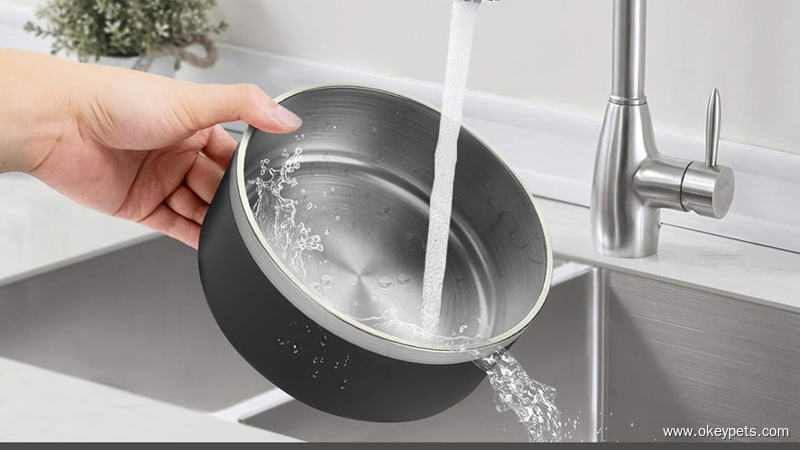
A simple routine:
Empty leftover food or water
Rinse with warm water to remove loose debris
Wash with dish soap and a soft sponge
Rinse thoroughly to remove all soap
Air dry in a clean, well-ventilated area
Avoid steel wool or very aggressive scrubbers on plastic – they create more scratches and more places for bacteria to hide.
5. Matching Bowls to Dogs & Daily Scenarios
Choosing the right bowl isn’t only about material. Shape, depth, weight, and features all play a role.
5.1 Bowl Recommendations by Dog Type
| Dog Type / Trait | Common Issues | Recommended Bowl Shape & Features | Material Tips |
Short-nosed breeds (Pugs, French Bulldogs, etc.) | Nose pushed into food, difficulty breathing while eating | Wide, shallow bowl; slightly angled or tilted design | Stainless steel or ceramic with a wide opening |
Long-eared breeds (Cocker Spaniels, Basset Hounds) | Ears dipping into food/water, messy and unhygienic | Deeper, narrower bowl to keep ears outside the rim | Heavier stainless or ceramic to stay stable |
| Fast eaters / "inhalers" | Gulping food, risk of choking or bloat | Slow-feeder bowl with ridges/mazes, non-slip base | Stainless steel slow-feeder or high-quality plastic insert (replaced regularly) |
| Senior dogs / joint issues | Neck or shoulder discomfort while eating | Slightly elevated bowl stand at a comfortable height | Stainless steel or ceramic bowls that fit stable stands |
| Sensitive skin / chin acne | Redness, pimples, irritation on chin | Very smooth surface, easy to clean thoroughly | Polished stainless steel; avoid scratched plastic |
| Strong, boisterous dogs | Knocking bowls over, sliding around | Heavy or non-slip base, possibly wider footprint | Stainless steel with rubber ring, or heavy ceramic |
5.2 Bowl Recommendations by Scenario
| Scenario | Hygiene Risk Level | Recommended Bowl Type | Extra Hygiene Tips |
| Single-dog household | Moderate | Standard stainless steel food and water bowls | Wash food bowls after each meal; water bowls daily |
| Multi-dog household | Higher | One clearly marked bowl per dog (color/shape) | Avoid sharing food bowls; clean more frequently |
| Crate / kennel feeding | Higher | Bowls that attach to crate/door (clip-on or hanging) | Prevent tipping and contamination from bedding/floor |
| Outdoor feeding areas | Higher | Heavy, non-tip bowls or raised stands | Avoid leaving wet food out; wash immediately after use |
| Travel, hiking, car | Variable | Collapsible silicone bowls for water + one stainless bowl for main meals | Deep clean travel bowls after trips |
| Pet shops / boarding / daycares | Very high | Commercial-grade stainless steel, easily sanitized | Strict cleaning schedule and separate bowls for each dog where possible |
These tables help you move from “What material is best?” to “What’s best for this dog in this situation?”
6. When Should You Replace a Dog Bowl?
Don’t wait until the bowl looks disgusting. Small defects often appear long before that and can already be harboring bacteria or causing other risks.
6.1 Classified by material
| Material | Replacement Red Flags | Why It Matters | Action |
| Stainless steel | Rust spots, pitting, deep scratches you can feel with a nail; inner coating or paint peeling | Damaged areas can trap bacteria; flaking coatings may be ingested | Replace the bowl; avoid coated interiors if they peel easily |
| Ceramic | Any chip, crack, or visible hairline fractures; glaze crazing (fine crack lines in the glaze); pieces of glaze missing | Cracks and crazing allow bacteria and moisture to penetrate; fragments can be ingested | Stop using immediately and replace with an intact bowl |
| Plastic | Heavy scratching; cloudy, rough, or discolored surface; bite marks, cracks, warped shape | Scratches and damage greatly increase bacteria retention; aging plastic may become unstable | Replace frequently; do not keep plastic bowls long-term |
| Bamboo / plant-based blends | Soft spots, swelling, flaking, or delamination; loss of shape | Structural breakdown makes cleaning less effective and can cause micro-gaps for bacteria | Replace and avoid prolonged soaking or extreme temperatures |
| Silicone | Tears, cracks, sticky or gummy texture; deformed folds in collapsible areas | Bacteria can hide in damaged areas; material may be degrading | Replace and check folds and rims regularly |
A simple rule:
If you wouldn’t feel comfortable eating from that bowl yourself, it’s time to replace it for your dog.
7. For Pet Brands, Retailers & E-Commerce Sellers
If you’re a pet brand, retailer, wholesaler, or online seller, hygienic dog bowls are not just a commodity item – they are:
· A potential differentiator (hygiene-focused product story)
· A potential risk (if quality and materials are not well-controlled)
7.1 What to Look for in a Manufacturing Partner
When developing dog bowls or other hygiene-sensitive pet products, it’s smart to check whether your factory can provide:
Certifications and audits
· Quality and social responsibility systems (e.g., ISO9001, BSCI)
· Relevant product safety or conformity marks where needed (e.g., CE for certain categories)
Material traceability
· Food-grade stainless steel grades
· Verified food-safe ceramic glazes
· Clear information on plastic, silicone, and resin types used
Process & quality control
· Surface smoothness and finishing standards
· Drop tests, temperature tests, stability tests where relevant
· Packing design that avoids scratching and damage in transit
E-commerce readiness
· FBA-friendly packaging and labeling
· Support for multi-SKU assortments and smaller trial orders
· Experience with global shipping and documentation
When all of this is in place, you can confidently market your products as hygienic, safe, and reliable, instead of just “cute bowls”.
7.2 How OKEYPETS Supports Hygiene-Focused Pet Brands
While many people know OKEYPETS for dog harnesses, collars, and leashes, a large part of our work is helping brands build cohesive, safety-focused pet product lines through OEM/ODM.
About OKEYPETS
Founded in 2015, Guangzhou OKEYPETS Products Co., Ltd. is a professional pet product manufacturer specializing in dog harnesses, collars, leashes, bandanas, and pet accessories. With ISO9001, BSCI, and CE certifications, we ensure every product is safe, durable, and responsibly produced.
OKEYPETS provides OEM/ODM customization for design, printing, and labeling, serving more than 5,000 brands worldwide. Our factory-direct model combines competitive pricing with strict quality control, and for e-commerce clients we offer full FBA shipping support, helping new brands grow faster.
OKEYPETS is a regular exhibitor at Global Pet Expo in Orlando, USA and InterZoo in Nuremberg, Germany, where we showcase our latest innovations and connect with global buyers.
If you’re planning a hygiene-focused feeding range (bowls, mats, storage containers, and matching accessories), partnering with a certified, export-experienced factory makes it much easier to:
Tell a credible “safety & hygiene” story to customers
Reduce the risk of returns and complaints
Scale faster across multiple markets and platforms

8. FAQ
Q1: Which dog bowl material do vets prefer for hygiene?
Most vets prefer polished stainless steel as the first choice for daily food and water, with high-quality, intact ceramic as a second option. Plastic is generally not recommended for long-term daily use.
Q2: How often should I wash my dog’s bowl?
Wash food bowls after every meal, and water bowls at least once a day. For raw or wet food, or multi-dog homes, clean even more frequently and add a weekly deep clean.
Q3: Can multiple dogs share one bowl?
It’s safer for each dog to have its own bowl, especially for food. Shared bowls increase the risk of spreading parasites and infections.
Q4: Are bamboo or plant-based bowls safe?
They can be safe when made by reputable manufacturers and used correctly. They’re a good fit for dry food or treats, but generally can’t match stainless steel in durability and high-temperature resistance.
Q5: Can the bowl cause my dog's chin acne?
Yes, in some cases. Rough, scratched bowls – especially plastic – can trap bacteria that irritate the skin. Switching to a smooth stainless steel bowl and improving cleaning often helps.
9. Key Takeaways
Stainless steel is usually the best all-round choice for hygiene, durability, and ease of cleaning.
Ceramic is also hygienic when intact and food-safe, but must be replaced at the first sign of damage.
Plastic is best treated as temporary, not as a long-term daily bowl.
Choosing the right shape, depth, and features matters just as much as material.
Regular cleaning and timely replacement turn your dog’s bowl from a potential “bacteria hotspot” into a safe feeding station.
For brands and retailers, working with a certified, OEM/ODM-capable manufacturer like OKEYPETS makes it much easier to build and scale hygiene-focused pet product lines.
Reasons for recommending
[1]: Get insights on the signs that indicate it's time to replace your dog's bowl.
[2]: Learn effective strategies to ensure your dog's feeding area remains hygienic and safe.
[3]: Find tips for safely feeding multiple dogs to prevent health risks.
[4]: Discover effective pet-safe disinfectants to keep your dog's bowl clean.
[5]: Understand how elevated bowl stands can improve your dog's eating experience.
[6]: Learn what makes a pet product hygiene-focused and why it matters.
[7]: Learn about the significance of food-safe ceramic in ensuring your dog's safety.
ReviewsNumber of comments: {{ page.total }}
I want to comment?
{{item.nickname ? (item.nickname.slice(0, 2) + '*****') : item.source === 1 ? 'mall buyer' : '--'}}
{{item.comment_time}}
Review in the {{item.country}}
Reviews
Merchant
{{replyItem.nickname ? (replyItem.nickname.slice(0, 2) + '*****') : replyItem.source === 1 ? 'mall buyer' : '--'}}
{{replyItem.parent_nickname ? (replyItem.parent_nickname.slice(0, 2) + '*****') : '--'}}
{{replyItem.is_merchant_reply === 1 ? replyItem.reply_time : replyItem.comment_time}}
Review in the {{replyItem.country}}
Reviews

No customer reviews
Recommended for you
Get in touch with us
OKEYPETS specializes in providing high-quality dog harnesses, collars, leashes, and other pet accessories. We are committed to quality and customization to ensure that your products not only look great, but also provide a sense of comfort and safety.
QUICK LINKS
PRODUCTS
CONTACT US
Contact Person: OKEYPETS Bella
TEL/WHATSAPP: +8618319574312
E-MAIL: sale@okeypets.com
ADD: No. 777, Helong First Road, Helong Street, Baiyun District, Guangzhou, Guangdong, China,. 510000
Copyright © 2026 | GUANGZHOU OKEYPETS PRODUCTS CO.,LTD - www.okeypets.com All Rights Reserved. | Privacy Policy