



Table of Contents
How to Clean and Maintain Dog Harnesses: A Manufacturer-Level Guide for Pet Brands & Retailers
2025-12-08
1. Why B2B Brands Should Care About Cleaning & Maintenance Content
Most end consumers think of harness cleaning as “optional.”
Most brands and retailers underestimate how much product care impacts:
· Perceived product quality
· Repeat purchase and reviews
· Return/complaint rates ("it smells", "it rusted", "it irritated my dog's skin")
From our experience manufacturing millions of harnesses for global markets (US, UK, AU, EU, etc.), one pattern is very clear:
Brands that educate their customers on correct cleaning & maintenance have fewer complaints and stronger perceived value—even when the product is identical.
This guide is written for you as a B2B buyer / brand / retailer, so you can:
1. Understand how different materials should be treated
2. Provide accurate care instructions to your customers
3. Design better packaging / inserts / blog content around maintenance
4. Use “easy to clean & maintain” as a real selling point, not just a slogan
5. You’re welcome to adapt this draft directly into your own brand blog, care manual, or packaging inserts.
2. The Real Risk Behind "Dirty Harnesses" (From a Brand Perspective)
For the end user, a dirty harness means smell and discomfort.
For a brand, a poorly maintained harness often shows up as:
· Negative reviews about smell, “cheap material,” “rusty metal,” or “it broke too quickly”
· Customer service tickets asking about skin irritation, color fading, or hardware issues
· Unnecessary returns that are actually usage/maintenance problems, not product defects
Typical issues caused by lack of cleaning and maintenance:
· Hygiene & skin issues
Sweat, skin oils, mud, and environmental pollutants accumulate in padding and webbing. Sensitive dogs may develop redness or irritation where the harness sits.
· Perceived product "aging"
Stiff, dirty straps and dull prints make a harness look older than it really is—customers blame quality, not usage.
· Hardware degradation
Saltwater, snow-melt chemicals, or dog saliva can slowly corrode metal if not rinsed. Customers will call this “rusty” or “poor hardware quality.”
· Hidden safety risk
Dirt and sand in stitching, plus repetitive stress, can weaken structural points. If a buckle or strap fails, it becomes a serious safety complaint.
When you give your customers clear cleaning guidance, many of these problems disappear before they become your customer service problem.
3. Start with the Materials: What Are Your Harnesses Made Of?
As a B2B buyer or brand, you typically know your bill of materials. The key is to translate that into simple care guidance for your end consumer.
Common harness components and what they mean for cleaning:
| Component | Typical Material | Cleaning / Care Implications |
| Webbing straps | Nylon / polyester | Robust, hand-wash safe, avoid prolonged high-heat drying. |
| Padding / lining | Neoprene, air mesh, foam, soft fabric | Must dry completely to avoid mildew; no high-temperature heat. |
| Outer shell | Printed polyester, oxford, canvas-style fabric | Gentle hand-wash; avoid aggressive scrubbing on print. |
| Reflective areas | Woven reflective yarn / heat-transfer films | Avoid hard brushing and high heat; do not iron. |
| Metal hardware | Zinc alloy, stainless steel, iron with plating | Rinse salt, chemicals; dry off; avoid harsh descalers. |
| Plastic hardware | POM/ABS buckles and adjusters | No high heat; avoid force twisting when cold/wet. |
| Leather details | Genuine leather or PU details | Surface wipe only, avoid soaking and strong detergents. |
4. Recommended Cleaning Frequency by Customer Scenario
For B2B, it's useful to give scenario-based guidance you can reuse in manuals and blogs.
Below is a table you can adapt directly for your customers:
Customer Scenario / Dog Lifestyle | Typical Usage & Environment | Recommended Quick Clean (Wipe/Rinse) | Recommended Deep Clean (Soak & Scrub) | B2B Notes (What Your Brand Can Communicate) |
| City / Suburban Daily Walker | Pavements, parks, occasional rain; mostly dry & clean | Every 1–2 weeks | Every 4–6 weeks | Position as “easy-care”: short, regular refresh keeps harness looking new and reduces smell complaints. |
| Outdoor / Hiking / Trail Dog | Mud, rivers, bushes, dust, rough terrain | After any visibly dirty outing | Every 2–3 weeks during active seasons | Educate on post-adventure rinse; reduces "it got moldy" or "stiff straps" complaints. |
| Beach / Coastal Dog | Saltwater, sand, strong UV exposure | Rinse with fresh water after each beach visit | Every 2–3 beach trips | Crucial for preventing corrosion reports on metal parts; highlight that saltwater must be rinsed off. |
| Snow / Winter in Cities | Snow, slush, road salt, de-icing chemicals | After walks on salted roads | Every 2–4 weeks | Communicate that road salt is harsh on materials & dog skin—rinsing is care for both harness and the dog. |
Indoor / Small Companion Dog (Long Wear) | Harness worn many hours per day indoors or for short walks | Weekly spot cleaning of chest and armpit areas | Every 3–4 weeks | Useful for small-dog brands; link to “comfort & skin health” plus long-term appearance of premium harness. |
Multi-Dog / Kennel or Daycare Environments | Shared gear, higher wear, higher hygiene expectations | After each day of shared use | Weekly deep clean | Important for B2B customers like groomers, daycares; reduces hygiene concerns & cross-dog contamination. |
| Sensitive Skin / Allergy-Prone Dogs | Any environment; dog has known skin sensitivities | Light wipe after use with very mild/unscented cleaner | Every 2–3 weeks with hypoallergenic products | Encourage hypoallergenic detergents and thorough rinse; helps avoid returns where customers blame materials. |
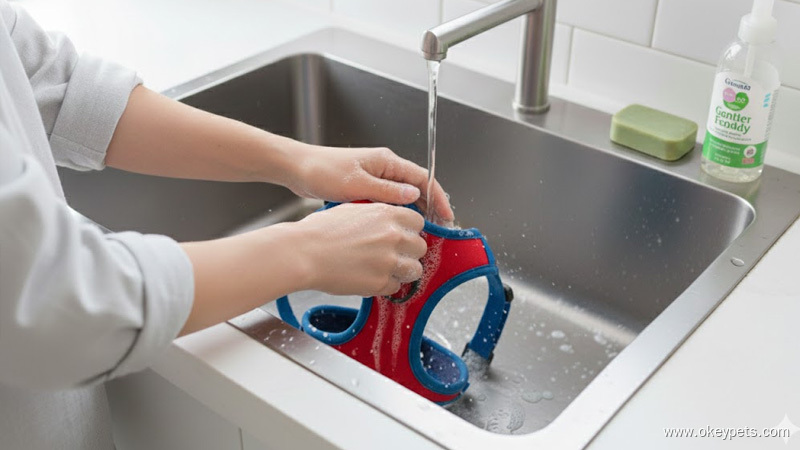
5. Two Cleaning Routines Your Customers Can Easily Follow
You can teach your end customers two simple routines. This reduces misuse and makes your brand look professional and caring.
5.1 “Quick Maintenance Clean” (Approx. 3 Minutes)
Use in your communication like: “For everyday upkeep and odor control”.
· Unclip harness, shake off hair and dried dirt.
· Wipe with a cloth dipped in lukewarm water + a few drops of mild detergent or dog shampoo.
· Focus on chest, armpit, and neck areas.
· Wipe again with clean water (no soap).
· Air dry completely in shade.
5.2 “Deep Clean & Deodorize” (For Heavy Dirt & Smell)
· Use in your FAQ/blog as the recommended method when customers complain about smell or stiffness.
· Shake and pre-rinse under lukewarm water.
· Soak harness in a basin with mild detergent for 10–20 minutes.
· Use a soft brush on heavily soiled areas, buckles, and seams.
· Optional deodorizing step (baking soda or diluted vinegar).
· Rinse thoroughly until no soap remains.
· Gently press out excess water without twisting.
· Air dry fully in a ventilated, shaded area.
6. Cleaner Choices: What Your Brand Should Recommend (and Avoid)
From a B2B standpoint, you don’t need to promote complex recipes; you need safe, clear, low-risk instructions.
Baseline recommendation:
· Unscented, mild liquid detergent OR dog shampoo
· Warm (not hot) water
· Thorough rinse
Safer "natural" additions you can mention carefully:
· Baking soda for odor (as paste or mixed in wash)
· Diluted white vinegar (1:4) as optional final rinse, always followed by clean water
Caution in your content:
· Advise against mixing any products with bleach or ammonia
· Clarify that hydrogen peroxide–based mixes may lighten fabrics and should be patch-tested
· Recommend customers with sensitive-skin dogs consult their vet before using anything stronger than mild soap
Your goal as a brand: simple, consistent, low-liability guidance.
7. Post-Cleaning Safety Check: Reducing Failure & Complaint Risk
Encourage end customers to inspect the harness after cleaning. This is a key way to prevent:
· Pulling failures
· Negative reviews like “broke suddenly”
You can provide a short checklist:
· Webbing: No deep cuts, heavy fraying, or chewed areas.
· Stitching: No broken or loose threads at joints and load-bearing points.
· Hardware: D-rings and clips should be rust-free, not bent or deformed.
· Buckles: No visible cracks; must close with a clear “click” and resist pulling.
· Padding/Lining: No lumps, peeling, or mildew smell.
· Fit: After refitting, still able to slide two fingers between harness and dog.
You can even suggest:
"If you see any of these issues, discontinue use and replace the harness for safety."
This protects the dog and your brand reputation.
8. Common Cleaning Mistakes & How Your Brand Should Address Them
Instead of just listing mistakes, here’s a table you can reuse in your FAQ or training materials:
| Common Customer Mistake | What End Customer Typically Does | Risk / Impact on Product & Brand | Recommended Brand Guidance |
| Using bleach or harsh chemical cleaners | Uses household bleach or strong multi-purpose cleaners to "disinfect" | Fiber damage, color fading, skin irritation → complaints of "poor quality" and "allergic harness" | Clearly state: no bleach / harsh chemicals. Recommend mild detergent or dog shampoo only. |
| Adding fabric softener | Washes harness with laundry + fabric softener | Residue on webbing, potential skin irritation, reduced friction → perceived "slippery" or "sticky" straps | Advise against fabric softener; emphasize complete rinsing and simple cleaners. |
| Tumble drying on high | Throws harness in dryer with clothes | Warped buckles, weakened webbing, damage to reflective parts → early failure and "poor durability" reviews | “Air dry only, in shade.” Use drying icons on care labels/packaging. |
| Scrubbing prints & reflective strips aggressively | Uses hard brushes directly on printed logos or reflective tapes | Scratched logos, reduced reflectivity, worn appearance → "print came off," "reflective part stopped working" | Recommend soft brush only, gentle scrubbing, avoid aggressive brushing on prints/reflective elements. |
| Not rinsing out detergent fully | Quick rinse; soap residue remains in padding and seams | Residual chemicals against skin, especially when wet → itching, redness blamed on harness material | Instruct: “Rinse until no bubbles remain.” Optionally suggest a second clean water rinse for sensitive-skin dogs. |
| Storing while still damp | Puts damp harness in closed drawer or container | Mildew, bad odor, black spots → “moldy harness,” higher return/complaint risk | Emphasize “completely dry before storage” and “store in a cool, dry, ventilated place.” |
Washing with new, dark, or heavily dyed clothing | Throws harness into mixed laundry with color-bleeding garments | Harness gets stained or discolored; customer sees it as “color fading” or factory defect | Suggest washing dog gear separately from new or dark clothing, especially light-colored or pastel harnesses. |
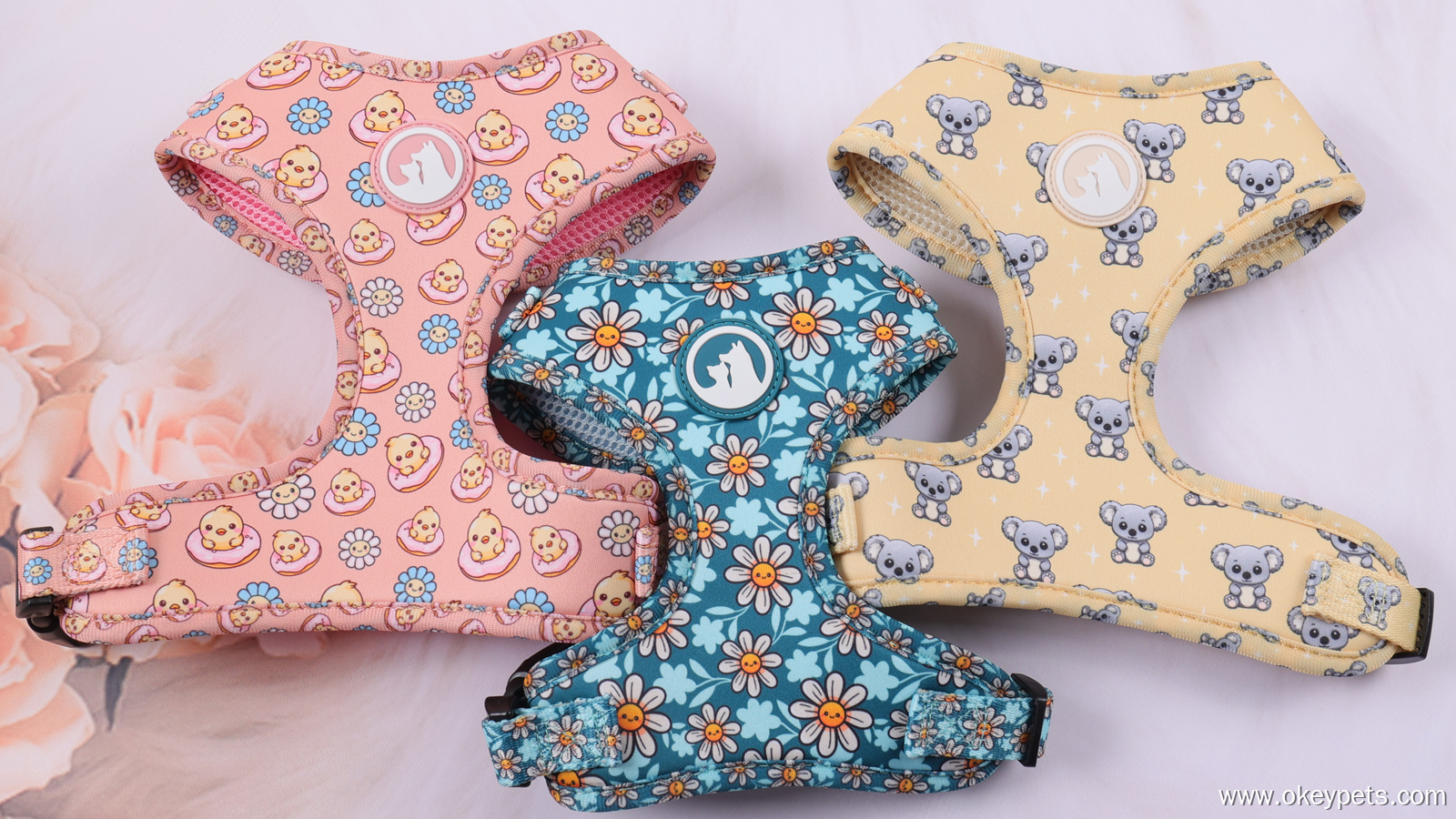
9. OKEYPETS Harnesses: Care Recommendations You Can Reuse
As a manufacturer specializing in collars, harnesses, leashes, life jackets, and pet apparel, OKEYPETS designs products with:
· High-strength polyester/nylon webbing
· Colorfast printing (tested for wash durability)
· Durable hardware suitable for daily and outdoor use
Our general care standard (which you can adapt for your private label lines):
Preferred method:
Hand wash in lukewarm water with mild detergent/dog shampoo.
Machine wash (if allowed by your brand positioning):
Place harness in laundry bag
Use gentle cycle, cold water
No bleach, no fabric softener
Air dry only, no tumble drying
Do not:
Iron
Expose to open flame or very high heat
Use strong chemical cleaners or solvents
For our OEM/ODM partners, we also:
· Customize care labels and washing symbols based on your market requirements
· Advise on material combinations that are more wash-friendly for specific markets (coastal, outdoor, etc.)
· Provide test reports (e.g., colorfastness, tensile strength) to support your marketing and compliance needs
10. FAQ (Framed for Use in Your Brand Communication)
You can reuse or adapt these Q&As directly for your own FAQ pages.
Q1. Can I machine wash this harness?
We recommend hand washing to maximize product life.
If machine washing is necessary:
Use a laundry bag
Select a gentle, cold cycle
Use mild detergent only
Do not tumble dry; air dry in shade
Q2. Why does the metal ring show spots or discoloration?
Exposure to saltwater, road salt, or chemicals without rinsing can affect surface appearance.
We recommend:
Rinsing the harness with fresh water after beach visits or winter walks with de-icing salt
Drying metal hardware thoroughly before storage
Q3. The harness smells even after cleaning. What should I do?
Persistent odor may mean:
Dirt/soap trapped in padding or seams
Incomplete drying between uses
Long-term buildup of sweat and environmental contaminants
Advise customers to:
Do one thorough deep clean (soak, scrub, rinse until clear, air dry fully)
If odor remains, it may be time to replace the harness for hygiene reasons.
Q4. My dog’s skin seems irritated under the harness. Is it the material?
It can be:
Residue from detergent or softener
Dirty or damp harness surface
Or, indeed, a sensitivity to certain materials or cleaners
Guidance:
Rewash the harness with unscented, mild detergent, then rinse very thoroughly
Ensure it is completely dry before use
If irritation persists, advise seeing a veterinarian and considering a different harness style or material
Reasons for recommending
[1]: Understanding the significance of cleaning & maintenance can enhance product quality and customer satisfaction.
[2]: Identifying safety risks can help brands prioritize customer safety and product reliability.
[3]: Providing a comprehensive FAQ can enhance customer support and satisfaction.
[4]: Understanding machine washing guidelines can help customers maintain their products effectively.
[5]: Proper care for metal hardware can prevent corrosion and enhance product durability.
ReviewsNumber of comments: {{ page.total }}
I want to comment?
{{item.nickname ? (item.nickname.slice(0, 2) + '*****') : item.source === 1 ? 'mall buyer' : '--'}}
{{item.comment_time}}
Review in the {{item.country}}
Reviews
Merchant
{{replyItem.nickname ? (replyItem.nickname.slice(0, 2) + '*****') : replyItem.source === 1 ? 'mall buyer' : '--'}}
{{replyItem.parent_nickname ? (replyItem.parent_nickname.slice(0, 2) + '*****') : '--'}}
{{replyItem.is_merchant_reply === 1 ? replyItem.reply_time : replyItem.comment_time}}
Review in the {{replyItem.country}}
Reviews

No customer reviews
Recommended for you
Get in touch with us
OKEYPETS specializes in providing high-quality dog harnesses, collars, leashes, and other pet accessories. We are committed to quality and customization to ensure that your products not only look great, but also provide a sense of comfort and safety.
QUICK LINKS
PRODUCTS
CONTACT US
Contact Person: OKEYPETS Bella
TEL/WHATSAPP: +8618319574312
E-MAIL: sale@okeypets.com
ADD: No. 777, Helong First Road, Helong Street, Baiyun District, Guangzhou, Guangdong, China,. 510000
Copyright © 2026 | GUANGZHOU OKEYPETS PRODUCTS CO.,LTD - www.okeypets.com All Rights Reserved. | Privacy Policy